Ask a room full of engineers, IT leads, and operations managers what worries them most about AI, and you will hear a version of the same fear: it will take more jobs than it creates. This is not a fringe opinion. Anyone watching a fast-moving technology land on their team's future has good reason to worry.
We will not wave that concern away. It deserves a real answer, not a slogan.
The Part That Is True 

AI will automate some jobs. It already has. Rote data entry, first-pass formatting, basic transcription and search, the repetitive layer of work that exists in every engineering shop, that layer is shrinking, and it is not coming back. Anyone who tells you AI will only ever "augment" and never "replace" is selling something.
Pretending otherwise costs credibility with exactly the audience that needs a clear-eyed answer: the people who plan headcount, budget, and workflow two years out, not two quarters.
The More Accurate Picture: Multiplication, Not Replacement
Here is where the popular framing breaks down. AI is not replacing most employees. It is making them dramatically more productive, and that changes the ending of the story.
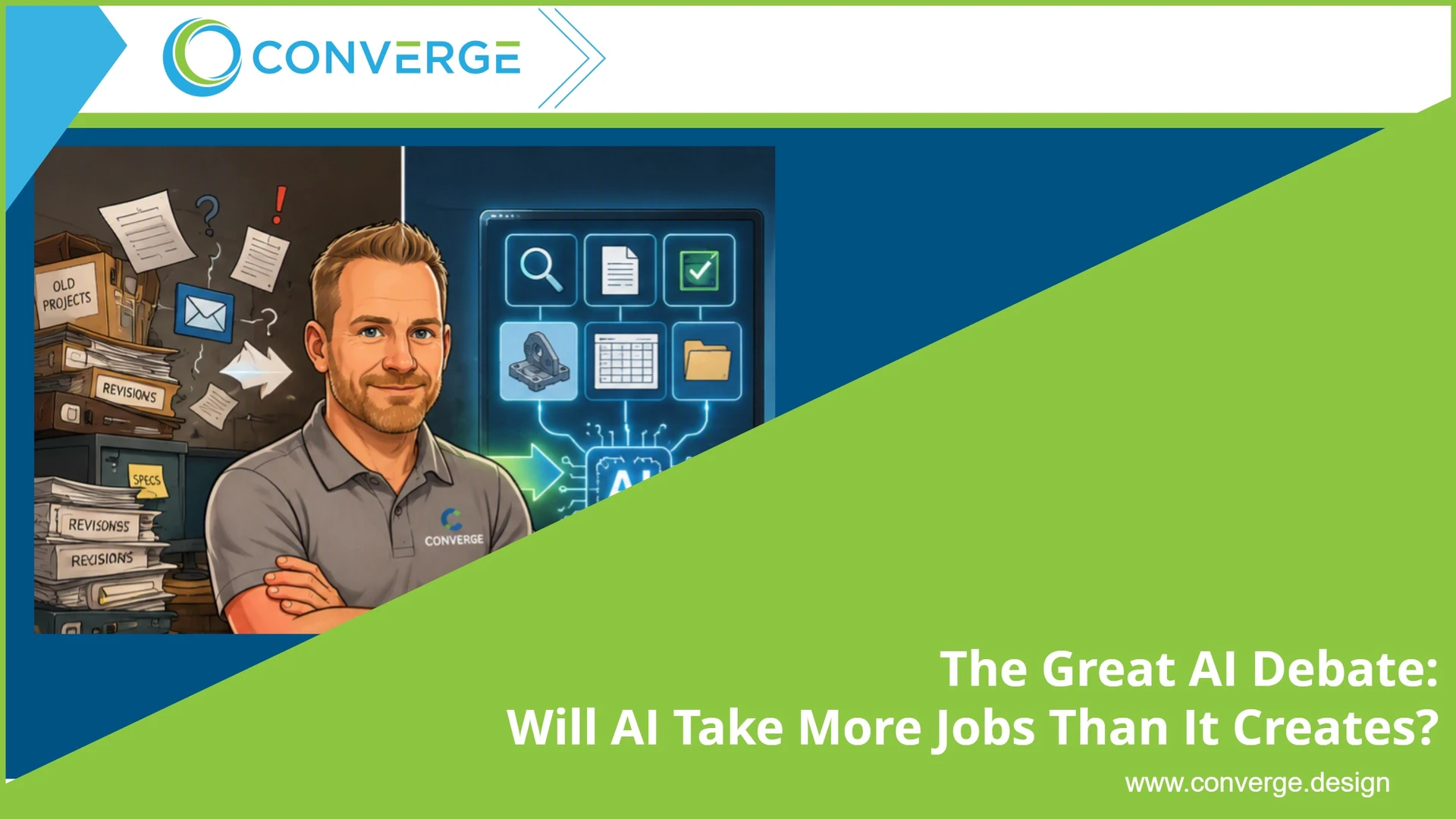
Picture an engineer inside a SOLIDWORKS environment. The old workflow: design a part, hunt through old project folders for the last revision of a similar component, manually reformat a spec sheet for a customer, then repeat that search when a change order lands. That searching and reformatting has never been the job. It is the tax on the job.
What Multiplication Looks Like on the Shop Floor
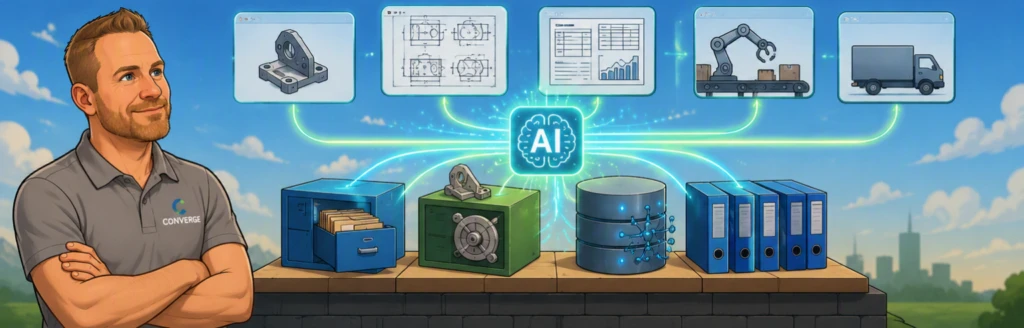
Now give that same engineer an AI workflow. The engineer queries prior designs in plain language instead of digging through a folder tree, and design iteration speeds up. AI drafts documentation in minutes; the engineer reviews it instead of writing it from scratch. Structured, searchable data flags a BOM discrepancy automatically, before it turns into a call and an email chain.
 Nobody's title changes. The engineer is still an engineer. What changes is how much real engineering work gets done in a week. Engineers spend less time on the tax and more time on the parts of the job that actually need an engineer. That is the shift.
This pattern shows up across engineering and design shops, not in some abstract office scenario. Design iteration gets faster. Documentation gets produced sooner. Someone finds the one piece of data buried in years of project history in seconds instead of an afternoon. A customer asks for a revised spec sheet and gets it back the same hour instead of the same week.
Roles built entirely on that searching and reformatting tax shrink. Roles built on judgment, design intent, and customer relationships grow, because AI cannot do that work. AI multiplies the people who can.
Why the Timing Matters
This is not a someday conversation. The landscape is shifting now, and it is shifting unevenly. Two shops with the same headcount and the same SOLIDWORKS seats will sit in very different competitive positions eighteen months from now. The difference will not be talent. One team put AI to work inside real engineering workflows. The other team debated whether to take it seriously.
The gap does not close gradually. It compounds. A year of practice compressing design and documentation cycles does not just put a team a year ahead. It keeps them accelerating, while the team that waited starts from zero against a moving target. And the target keeps moving, because the tools improve every quarter, and the teams already using them improve alongside them.
Being AI-Ready Is Not Luck. It Is Preparation.
None of this works without a foundation. Point an AI tool at disorganized, ungoverned product data and it will not multiply productivity. It will multiply confusion, faster. The engineer above gets a fast, accurate answer only because the data underneath it is already organized and searchable.
That is the real prerequisite, and it drives how we approach AI readiness: organize the data, distill it into something usable, then integrate AI into the workflows your team already runs. Skip the first two steps and the third step just automates the mess you already had.
Converge builds engineering AI workflows across your whole stack, not just SOLIDWORKS' built-in AI, and we work as implementers and integrators, not just software resellers. We are not here to replace your engineers. We are here to make sure your AI investment lands on solid ground instead of loose data.
If you are weighing whether to invest in AI readiness now or wait and see, know this: waiting has a cost, and that cost compounds. Let's talk about where your team stands and what a real AI workflow would look like inside it.