Every leadership team wants AI. Far fewer have asked the harder question: if you bought an AI tool tomorrow, could your business actually use it? In most engineering and operations environments, the technology is not the blocker. Instead, the state of the data and the processes underneath it holds you back.
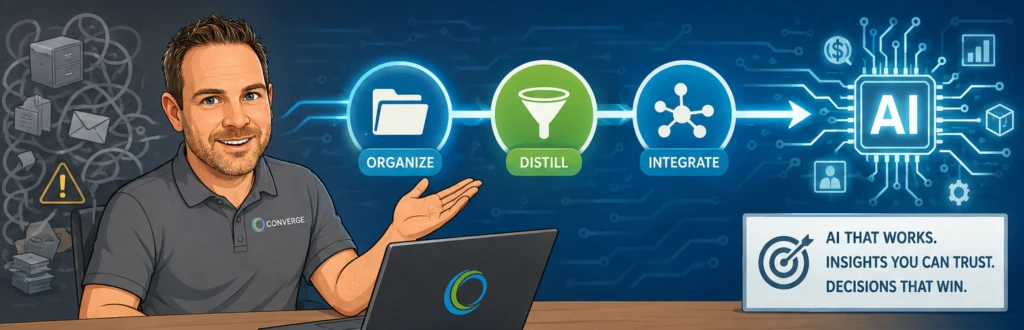
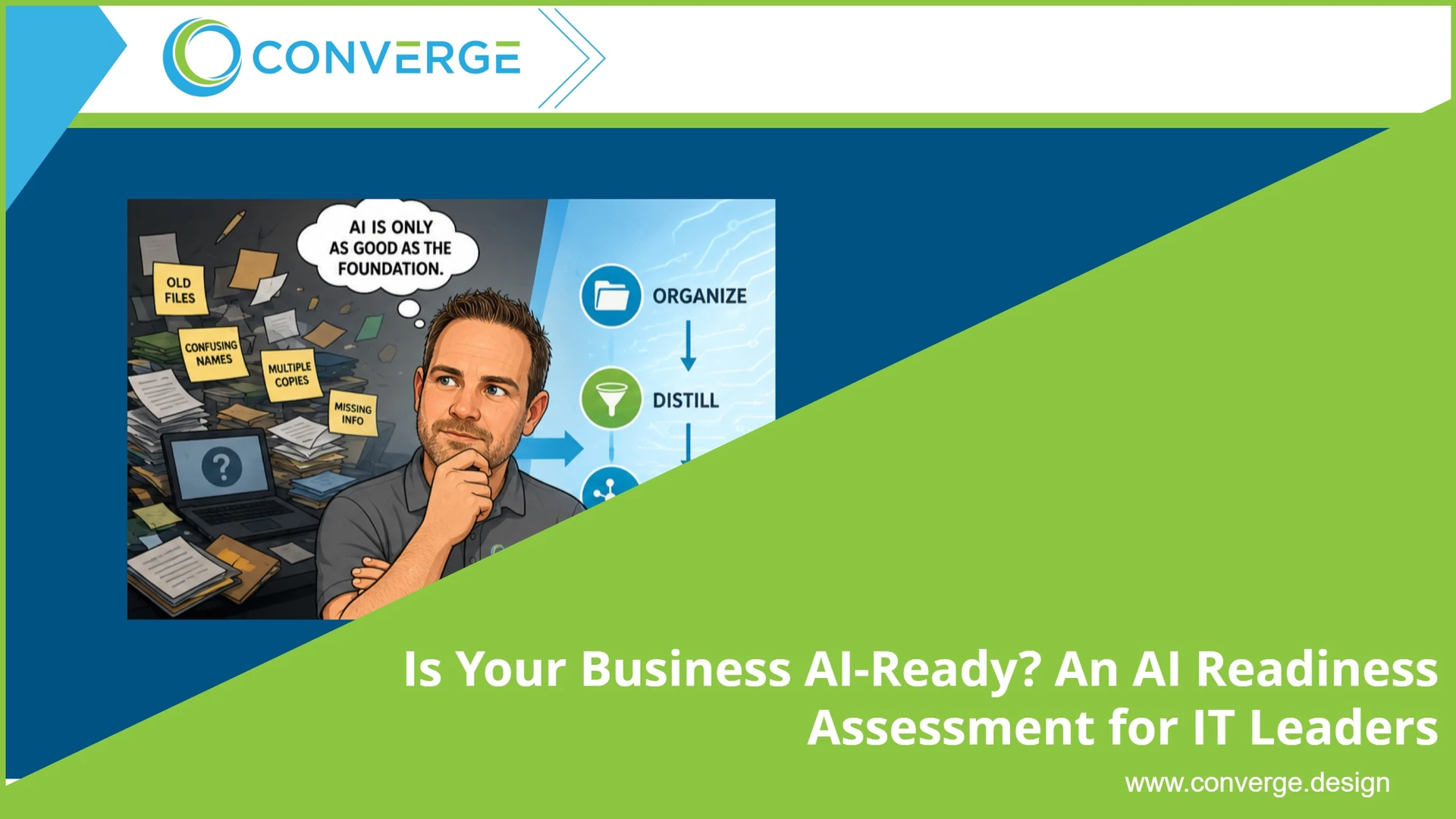
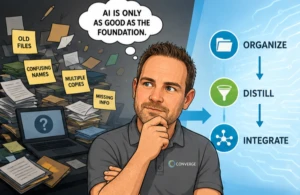
AI does not fix a messy foundation. Instead, it inherits it. For example, feed a model outdated specs, scattered files, or conflicting records, and it will produce confident, wrong answers faster than any person could. So we organize, distill, and integrate your data first, before a single tool goes live.
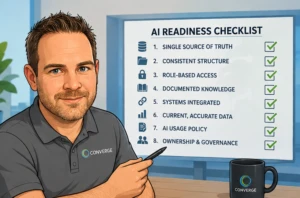
Use the checklist below to gauge where you stand. For each item, we describe what good looks like and what the gap costs you.
The AI Readiness Checklist
1. A single source of truth for critical data
Good looks like: Your engineering, project, and business records live in known, governed systems, not on desktops, in email, and on personal drives. The gap: If nobody can say which copy is current, then AI cannot either. As a result, it surfaces the wrong version, and you find out only after a decision already rests on it.
2. Consistent structure and naming
Good looks like: Files, parts, and projects follow predictable naming and folder conventions that the whole team actually uses. The gap: When structure varies, AI has to guess at how records relate. Consequently, retrieval turns unreliable, and the time you hoped to save goes into checking its work.
3. Access controls tied to roles 
Good looks like: People see the data their role requires, while you restrict sensitive records by design. The gap: AI amplifies whatever access you give it. So if you point a tool at an open system, it can expose salaries, IP, or customer data to anyone who asks the right question.
4. Documented knowledge, not tribal knowledge
Good looks like: You write down your core processes, standards, and decisions and keep them current, rather than leaving them in the heads of a few senior people. The gap: AI can only distill knowledge that exists in a form it can read. Meanwhile, undocumented expertise walks out the door at 5 p.m. and, within a few years, retires for good.
5. Systems that can talk to each other
Good looks like: Your CAD, PDM, ERP, and business tools connect through supported integrations or APIs, so nobody rekeys data by hand. The gap: When your systems cannot share data, every AI workflow stalls at the point where someone retypes it. In short, integration readiness turns a pilot into a production capability.
6. Current, accurate data
Good looks like: You maintain records, archive obsolete files, and give someone clear ownership of keeping the data clean. The gap: Stale data produces stale answers. For instance, an AI confidently quoting a superseded BOM or an expired price is worse than no AI at all.
7. A written AI usage policy 
Good looks like: Your team knows which tools it may use, what data belongs in them, and where the lines sit on client and proprietary information. The gap: Without a policy, staff reach for consumer AI tools anyway, and they often paste sensitive data into systems you do not control. So the question is not whether this happens. It already is.
8. Clear ownership and governance
Good looks like: One person owns data governance, reviews access, and signs off on how you deploy AI. The gap: Governance with no owner simply does not happen. Because accountability spread across everyone belongs to no one, small gaps compound into real exposure.
Where does your business land?
If you checked most of these, then you sit closer to ready than most, and the conversation shifts to where AI moves the needle first. But if several gave you pause, better to know now, before you invest in tools your foundation cannot support.
Either way, guessing is expensive. A Converge AI Readiness Assessment gives you a paid, structured review of your data, access, documentation, integrations, and governance. You walk away with a clear picture of what is ready, what is not, and what to fix first. In other words, it is the same Organize, Distill, Integrate approach we run before any AI build, now applied to your environment.