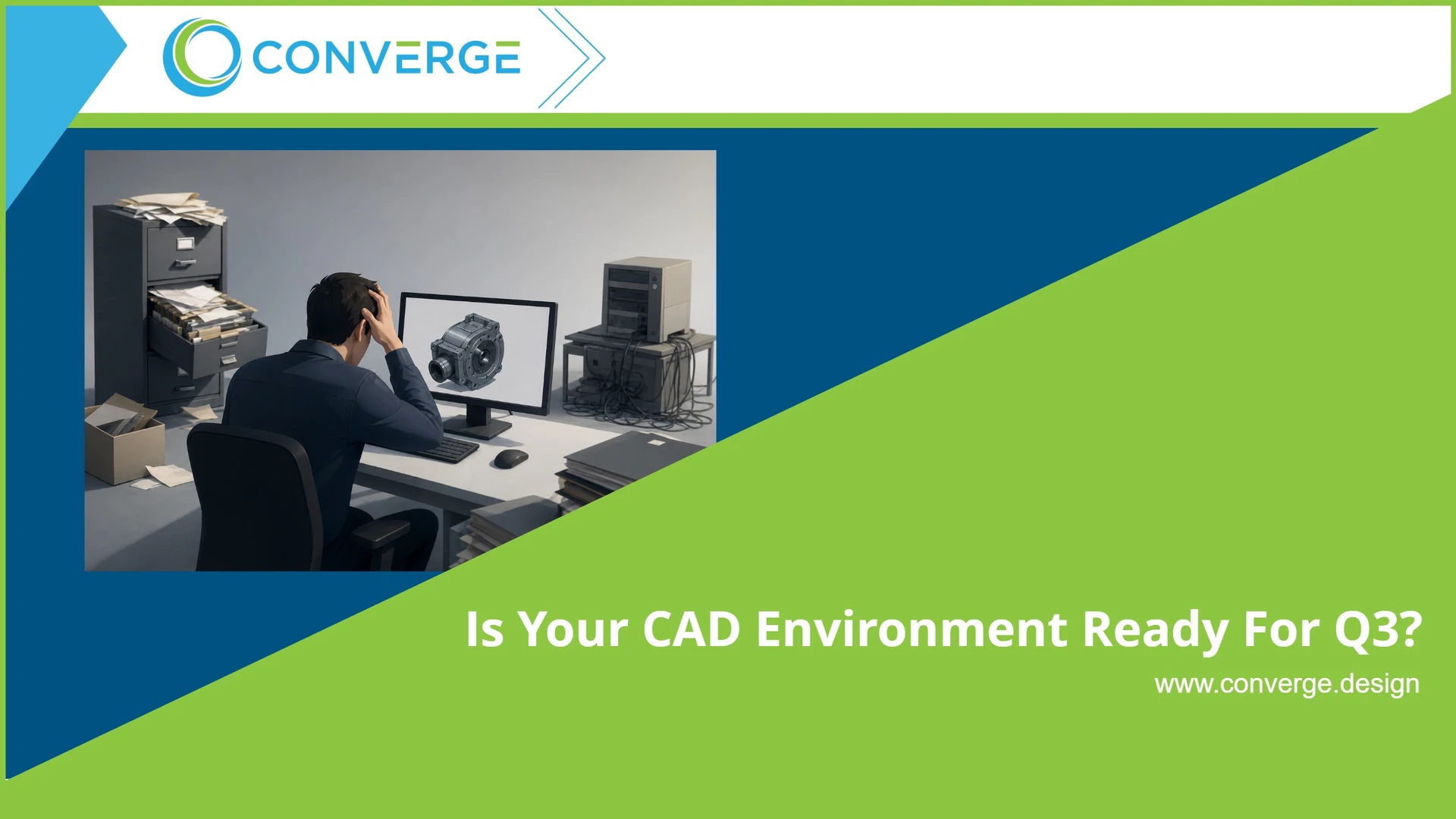
Q3 is when design cycles accelerate — and when a poorly maintained CAD environment stops being an inconvenience and starts costing real time.
New product initiatives kick off, revision cycles compress, and engineering teams are expected to move faster. Most don’t realize how much technical debt is sitting inside their CAD environment until a deadline exposes it.
Here’s what we see most often when we step into a CAD department that hasn’t had a structured review.
 Where Most CAD Departments Fall Short
 Where Most CAD Departments Fall Short
PDM vaults that have never been audited. A vault that worked fine for five users often becomes a liability for fifteen. We regularly find workflows that no longer match how the team operates, permission structures that have drifted, and archive servers with no reliable backup. Teams only discover these problems when a critical file goes missing or a workflow blocks a release.
No standardized templates or design libraries. Inconsistent title blocks, non-standard drawing templates, and ad-hoc part libraries slow down QA reviews and make onboarding new engineers harder than it needs to be. This is foundational work that most teams intend to do but never prioritize.
Hardware that doesn’t match workload demands. Simulation and rendering requirements have grown significantly, but hardware refresh cycles often haven’t. Engineers running SOLIDWORKS Simulation or Visualize on underpowered machines lose hours to slow solve times — and most organizations don’t measure that loss.
No visibility into license utilization. Are licenses sitting idle? Are the right users on the right product tiers? Are you paying for modules no one is opening? Without visibility into usage, you can’t optimize — and SOLIDWORKS license costs are often one of the largest controllable line items in a CAD budget.
Training that stopped after onboarding. SOLIDWORKS evolves meaningfully with each release, and most teams are leaving real productivity on the table because experienced users haven’t revisited their workflows in years. This is especially true for PDM, where informal habits quietly become the actual process.
Start With an ESPR
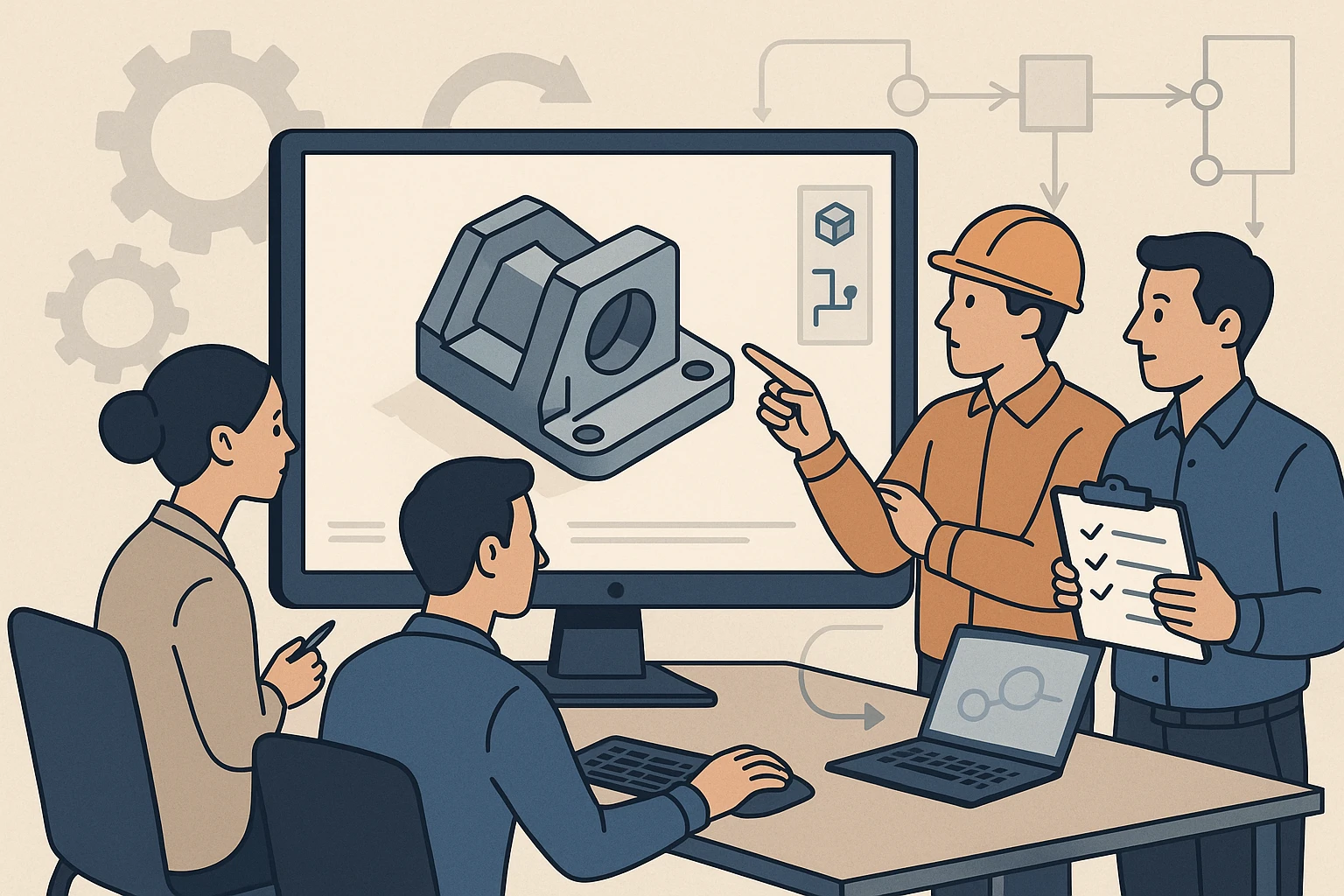
If you’re unsure where your biggest risks are, the right starting point is an Environment and Software Performance Review (ESPR).
The ESPR is a structured Converge engagement that gives CAD managers and engineering leaders a clear picture of where their environment stands — and what needs to change before Q3 accelerates. It covers software version and service pack alignment, PDM vault health, license utilization, hardware fit, and template standards. You come away with a prioritized remediation roadmap you can act on immediately.
This is a diagnostic, not a sales exercise. Whether you engage Converge to execute the remediation or handle it internally, you’ll have a document that tells you exactly where to focus.
Keep It Running With MCAS
 Keep It Running With MCAS
The ESPR is a snapshot. Managed CAD Administration Services (MCAS) is how you make sure the environment stays healthy.
MCAS is Converge’s ongoing managed service for SOLIDWORKS environments — essentially a dedicated CAD administrator without adding headcount. We handle proactive software updates, PDM vault administration, user and permissions management, license pool monitoring, and periodic health reviews to catch drift before it becomes a problem.
MCAS customers see fewer support escalations, faster onboarding for new users, and more predictable CAD performance — because the maintenance that usually gets deferred is actually getting done.
For teams that can’t justify a full-time internal CAD admin, MCAS provides that function at a fraction of the cost.
Q3 Doesn’t Wait
Engineering teams that go into Q3 with a clean, well-maintained CAD environment move faster and spend less time managing problems that shouldn’t exist. Teams that don’t often find themselves handling a crisis at exactly the wrong moment.
Ready to find out where you stand? Contact Converge to schedule your ESPR — and ask us how MCAS can keep your environment running at its best all year long.
Converge is a SOLIDWORKS Elite reseller and engineering technology partner specializing in deployment, administration, and managed services for design and engineering organizations.