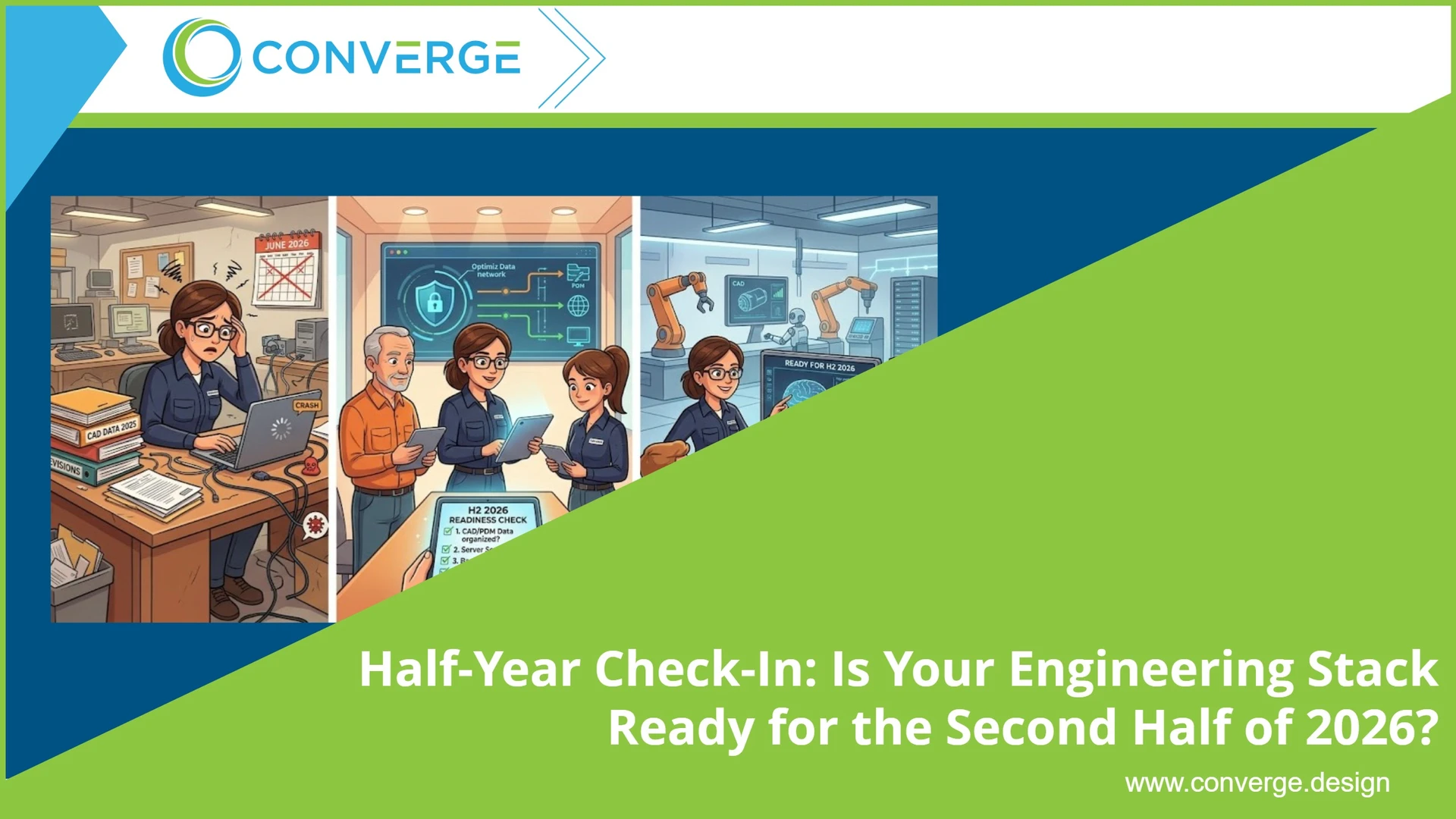
We are officially halfway through 2026. Therefore, it is the perfect time to pause and evaluate. For engineering managers, CAD admins, and technical leaders at mid-sized firms, daily project deadlines always take priority. Consequently, crucial infrastructure maintenance gets pushed to the back burner. However, relying on a "good enough" engineering stack will quietly drain your productivity. Worse, it exposes your firm to severe security vulnerabilities. 
To ensure your infrastructure can handle the upcoming months, take five minutes to walk through this mid-year checklist.
1. Is your CAD data organized and version-controlled in PDM?
- What "Good" Looks Like: Your team utilizes a centralized Product Data Management (PDM) system. As a result, every file is securely checked in, and version history is automatically tracked. Thus, engineers instantly find the exact revision they need.
- The Risk of the Status Quo: Without robust PDM, engineers routinely overwrite each other's work. Alternatively, they waste hours hunting through messy network folders. Ultimately, manufacturing a part from an outdated drawing leads to costly scrap and missed deadlines.
2. Is your hosting environment secure, scalable, and AI-ready?
- What "Good" Looks Like: Your files and applications live in a modern, optimized environment. Whether on-premise or cloud-hosted, this system scales effortlessly as your datasets grow. Furthermore, it provides the compute power necessary for emerging AI design tools.
- The Risk of the Status Quo: Outgrown servers inevitably degrade performance. This lag causes frustrating CAD slowdowns and system crashes. Additionally, rigid legacy hosting acts as a bottleneck, which blocks your team from integrating modern automation.
3. Are you protected against ransomware and hardware failure?
- What "Good" Looks Like: You have an automated, air-gapped backup strategy. This is combined with a documented disaster recovery plan. Consequently, if a workstation fails or a cyber threat strikes, you can resume operations within hours.
- The Risk of the Status Quo: Cybercriminals actively target mid-sized manufacturing firms. Therefore, if you lack robust protection, a single ransomware attack can freeze your entire operation. This threatens your intellectual property and costs thousands in downtime.
4. Is your team leveraging any AI tools, even basic ones?
- What "Good" Looks Like: Your engineers actively experiment with practical AI capabilities. For example, they use automated drawing generation or generative design algorithms. These tools successfully accelerate repetitive workflows.
- The Risk of the Status Quo: AI is no longer a futuristic concept. Instead, it is actively shaping engineering execution right now in 2026. Falling behind means your competitors will design, iterate, and quote projects at speeds you cannot match.
5. Do you have a renewal or upgrade plan before year-end?
- What "Good" Looks Like: You have mapped out your software licenses and hardware lifecycles well in advance. By doing this, you align your budget with technical requirements. This foresight ensures zero service interruptions.
- The Risk of the Status Quo: Waiting until December leads to rushed, reactive purchasing decisions. Specifically, you face unexpected price hikes and expired support contracts. Then, you are forced into software migrations during your busiest quarter.
Looking Ahead to H2 2026
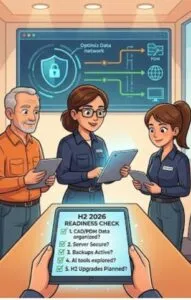 The second half of 2026 promises advanced AI tools and major platform updates. Meanwhile, cybersecurity compliance mandates will become increasingly stringent. Engineering teams that proactively audit their technical foundations today will move faster. Furthermore, they will innovate smarter and outpace the competition tomorrow. Conversely, those who delay will spend the rest of the year playing catch-up.
Let's make sure your stack is an asset, not a liability. Schedule a free mid-year planning session with Converge today. Together, we will build a roadmap to keep your engineering team firing on all cylinders.