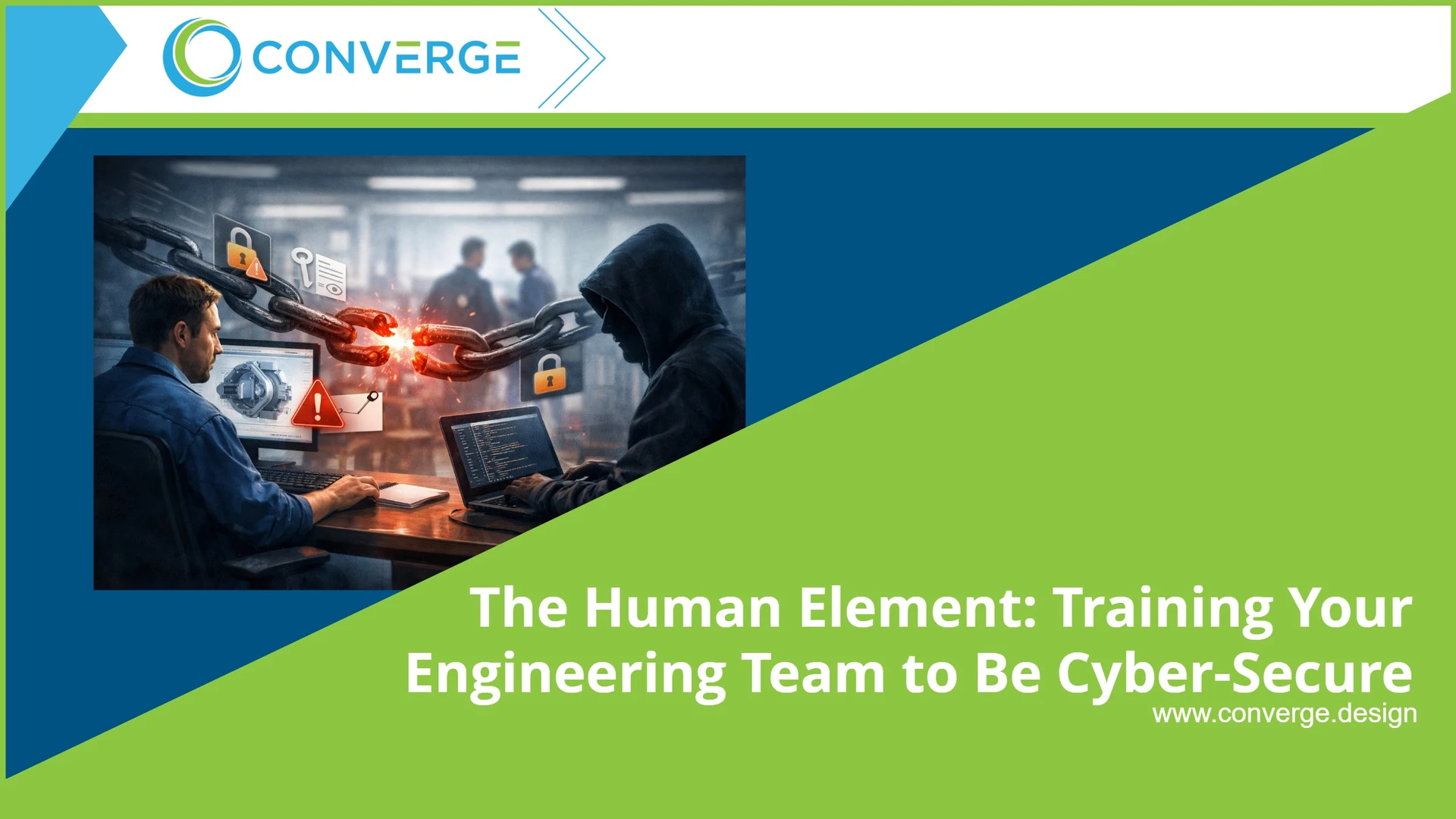
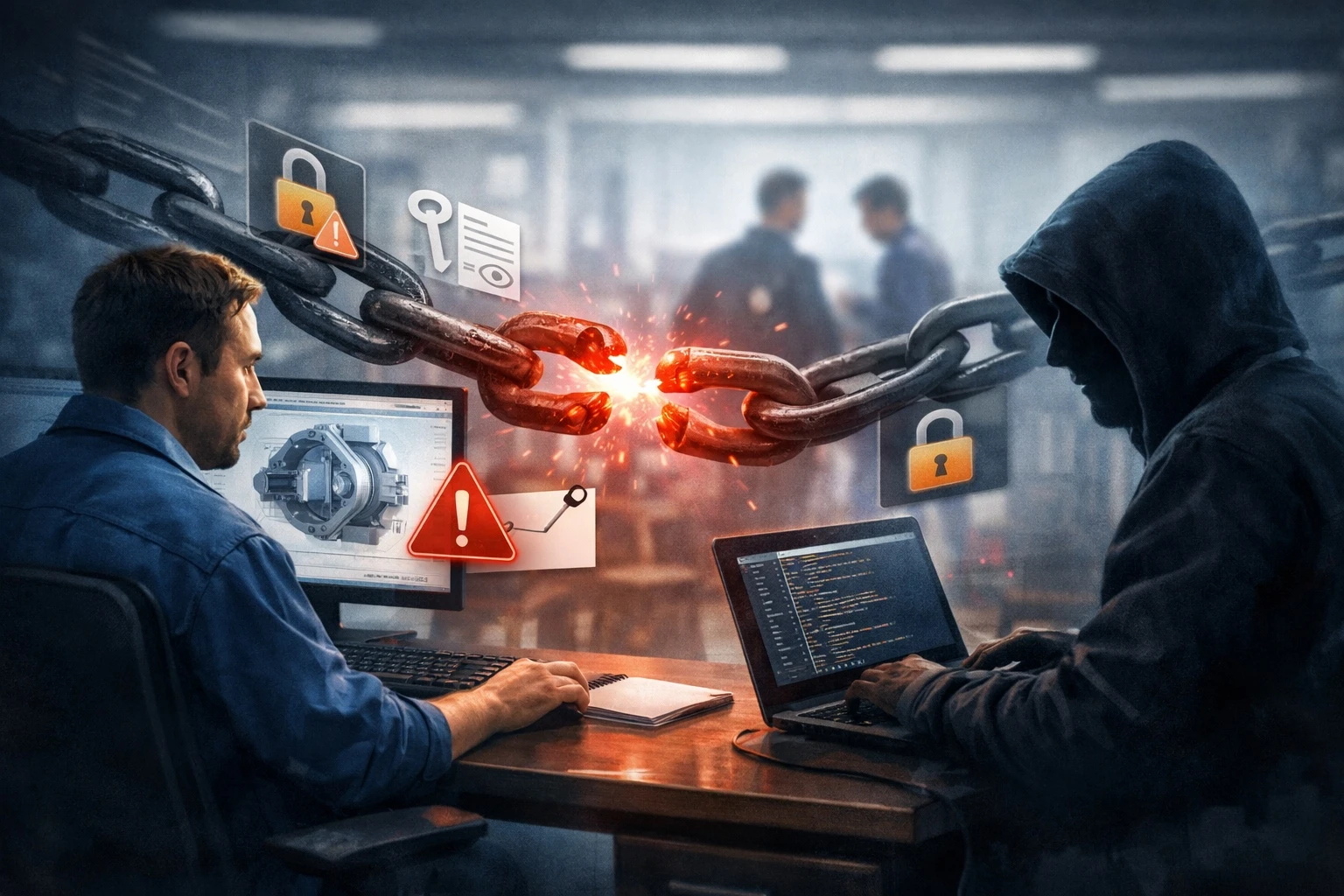
 Tools, firewalls, and processes matter — but people matter more. Across audits and security reviews, one truth keeps repeating: the human user is often the weakest link in any cybersecurity posture. Engineering teams are especially exposed — they hold IP, CAD models, PDM access, and systems that, if abused or mis-used, can cause serious business impact. Treating cyber-security as only an IT problem misses the point: you need to treat it as a people problem too.
Why engineers are a unique risk
Engineers routinely access sensitive design files, export BOMs, and exchange specs with suppliers and customers. That level of trust — combined with tight deadlines and frequent ad-hoc requests via email or chat — creates openings for phishing, credential theft, and accidental data leakage. Because engineering workflows often span multiple tools (CAD, PDM, ERP), a single human misstep can ripple through manufacturing and sales.
Security guidance from operational assessments is consistent: don’t assume a “set-and-forget” approach. Structure and training matter — the best PDM or CAD setup will still fail if users aren’t trained how to use it safely.
 What training should actually do
 What training should actually do
Training isn’t a one-hour slide deck — it’s a practice that turns risky behaviors into safe habits. A practical program for engineering teams should include:
-
Onboarding + regular refreshers. Require security awareness at hire and run mandatory annual refreshers so policies stay top-of-mind. Audits increasingly expect this evidence.
-
Role-based instruction. Engineers need different guidance than sales or HR. Standardize and teach secure CAD/PDM usage (how to check files in/out, export BOMs safely, label revisions correctly), secure remote access, and rules for sharing with vendors.
-
Phishing simulations and feedback. Safe, regular simulations help people recognize real attacks and let you tailor training to observed weaknesses.
-
Hands-on drills. Walk through incident scenarios (compromised credentials, suspicious file requests, or accidental public shares) so responses become muscle memory.
-
Practical policies, not just theory. Give engineers executable rules: where to store prototypes, when to escalate, what metadata to add in PDM, how to use password managers and MFA, and how to verify external requests for changes.
Make training part of your workflow

Training needs to be baked into daily work. Integrate reminders and short micro-lessons into the PDM UI, add security checks to change requests, and have PDM/IT logs reviewed for risky patterns. Encourage a culture where reporting a suspected email is quick and rewarded — not punished.
Measure what matters
Track completion rates, phishing click rates, and the number of reported suspicious events. Regularly consult PDM logs to spot unusual exports or repeated failed logins. These metrics let you show progress and prioritize follow-up training where it’s most needed.
Final thought
Human fallibility is a fact of life — but it’s not an excuse. With role-appropriate, repeated, and practical training (plus simple engineering-specific policies), your team moves from being the weakest link to being the organization’s first line of defense. Security isn’t a checkbox; it’s a capability you build into your people and your process. Don't know where to star? We can share with you our short, role-based training outline specific to SOLIDWORKS/PDM users that you can use for onboarding and annual refreshers. Contact us below!
-
Article by Tanner Knight, CSWE